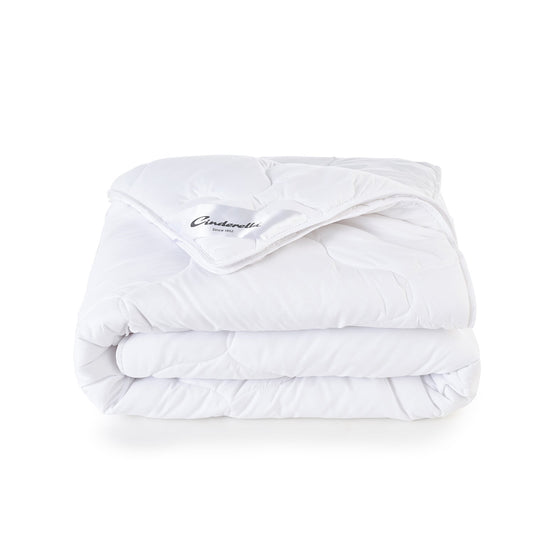
How do you wash a duvet cover before and after use?
We recommend always washing a new duvet cover before use at 60 degrees Celsius. Wash the duvet cover separately and inside out for the first few times. Don't overload the washing machine to ensure the duvet cover comes out clean, free of wrinkles and wash marks, and that bacteria like dust mites are killed.
It's common to choose the anti-crease or delicate wash cycle to ensure the duvet cover looks its best when taken out of the washing machine. Use a normal amount of detergent or washing powder for the first wash. Using a moderate amount of detergent prevents streaks. For light-colored duvet covers, use a detergent for colored items and for darker items, use a detergent for darker items. So, there's no need for bleach, vinegar, or soaking overnight in cold water!
What do the symbols on a Cinderella washing label mean?
Always read the care label carefully when washing a new duvet cover. Care instructions and washing instructions vary from duvet cover to duvet cover. Standard duvet covers (in cotton or sateen-cotton) include the care label below. Many of us have questions about reading care labels, so to make it easier, we've included the care label description.

How often do you wash a duvet cover?
To sleep in a clean bed, it's advisable to wash a duvet cover (or the entire bedding set) once a week. Duvet covers (and sheets) harbor a lot of bacteria because they come into direct contact with your skin. You also lose about 1 liter of moisture during sleep! Therefore, it's important to change your bedding at least once a week.
At what temperature should you wash a duvet cover?
All duvet covers can be washed at 60 degrees Celsius or colder. However, we recommend reading the care label carefully before putting your duvet cover in the washing machine! This can vary depending on the material. Bacteria like dust mites are definitely killed when you wash the duvet cover at 60 degrees Celsius.
How do you maintain the color of your duvet cover after washing?
When washing duvet covers and pillowcases, turn them inside out to preserve the color of the bedding and prevent fading. It's also important to use the right amount of detergent for the right colors. This prevents wear and tear on the appearance or print.
How were you more frugal and environmentally friendly?
- Don't wash with a half full drum!
- Don't use too much detergent
- Use biodegradable detergents
- Washing powders with the European Ecolabel guarantee that they produce as little water pollution and waste as possible.
- Use the short wash program or the energy saving button
- Hang your laundry on the line to dry.